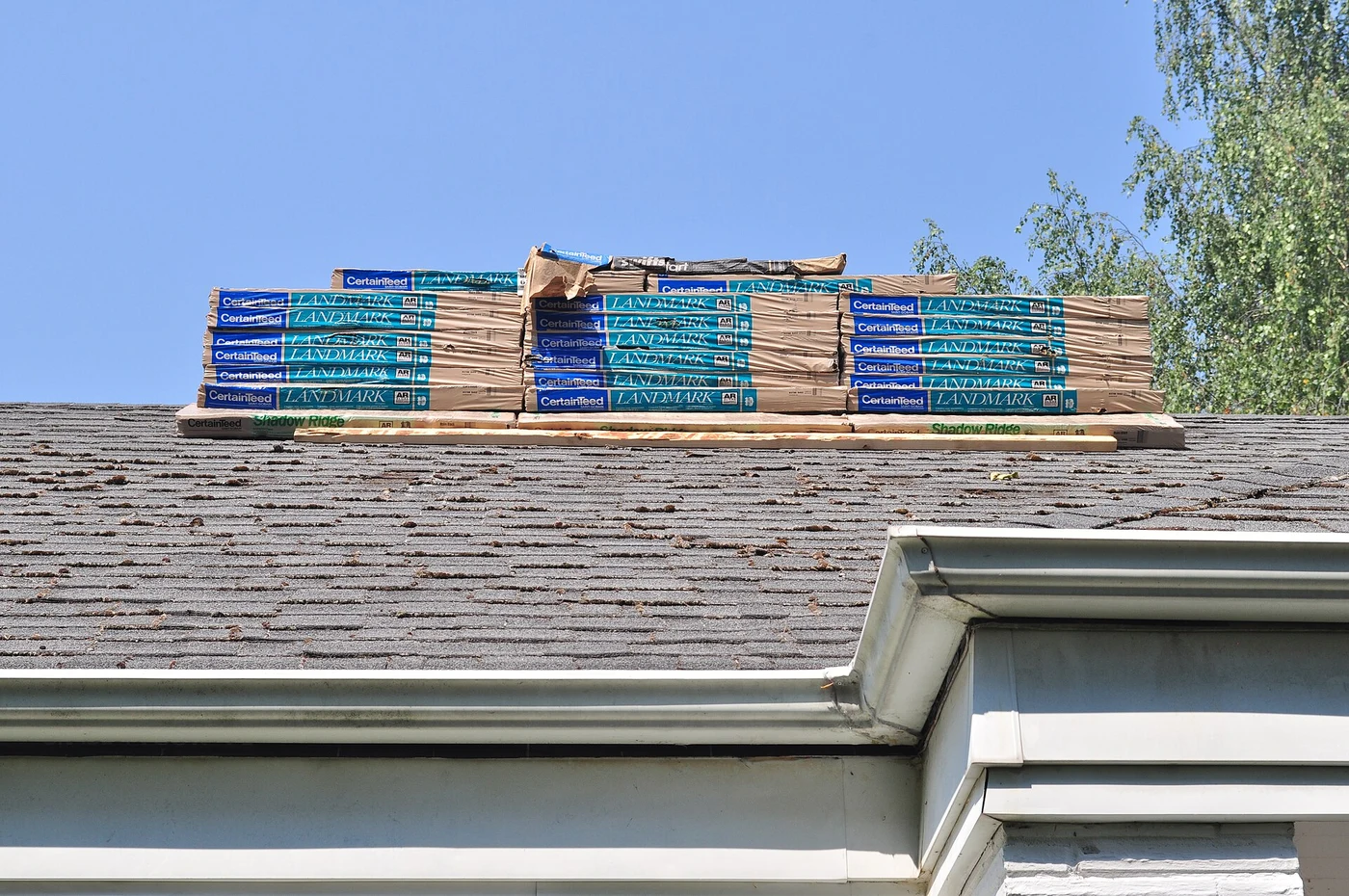
Sizing a dumpster for a roof is different from sizing it for a cleanout, because shingles are heavy. A roofing container almost always hits its weight limit before it runs out of space. The key number is squares, and this guide explains how squares, layers, and decking decide which size you need.
A roofing square is a standard unit that equals 100 square feet of roof area. Roofers measure and talk in squares, so knowing your roof size in squares is the fastest way to size a dumpster accurately. If you do not know the figure, your roofer will, since it drives the whole estimate.
The reason squares matter for the container is weight. A tear-off produces dense debris, and the total weight climbs with every square you remove, which is what binds the container well before it looks full.
As a general guide, a 20 yard handles the tear-off from many average single-layer asphalt roofs. Smaller roofs may fit a 15 yard, and larger homes or steeper, multi-layer roofs often need a 30 yard or a mid-job swap. Because shingle weight varies with type and age, the safest approach is to tell us your roof size in squares and the shingle type, and we will confirm the size.
Resist the urge to size up purely for space. A larger container does not raise the weight a truck can carry, so on a heavy tear-off the smarter move is sometimes two swaps of a right-sized container rather than one oversized box.
Two things push a roofing load heavier than the square count alone suggests.
Layers. If the old roof has two or three layers of shingles being torn off at once, the debris weight multiplies. A roof that would fit one container as a single layer can need significantly more capacity when all the old layers come off together.
Decking. If you are also replacing rotted or damaged decking, that plywood or board adds both weight and volume.
Factor it in when you plan the container, since it changes the math.
Tell us about layers and decking up front. They are the most common reason a roofing dumpster that seemed right turns out too small.
Asphalt shingles are the common case, but tile and slate are a different story. Both are far heavier than asphalt, pound for pound, so a tile or slate tear-off reaches the weight limit much faster. If your roof is tile or slate, call before you book. We will size it carefully and plan the number of containers or swaps so you are not caught by the weight.
A 20 yard holds the tear-off from many average single-layer asphalt roofs. Multiple layers, heavy architectural shingles, or added decking reduce that capacity because weight binds first. Tell us your roof size in squares and the shingle type, and we will confirm whether a 20 yard fits or you need a larger size or a swap.
Yes, significantly, because tearing off two or three layers at once multiplies the debris weight, so a roof that fits one container as a single layer can need more capacity with all layers removed, and replacing decking adds weight too, so tell us the layer count and whether decking is included so we size the container correctly. Multiple layers, heavy architectural shingles, or added decking reduce that capacity because weight binds first. Tell us your roof size in squares and the shingle type, and we will confirm whether a 20 yard fits or you need a larger size or a swap. Yes, significantly.
Tearing off two or three layers at once multiplies the debris weight, so a roof that fits one container as a single layer can need more capacity with all layers removed. Replacing decking adds weight too. Tell us the layer count and whether decking is included so we size the container correctly.
A 20 yard holds the tear-off from many average single-layer asphalt roofs. Multiple layers, heavy architectural shingles, or added decking reduce that capacity because weight binds first. Tell us your roof size in squares and the shingle type, and we will confirm whether a 20 yard fits or you need a larger size or a swap.
Yes, significantly. Tearing off two or three layers at once multiplies the debris weight, so a roof that fits one container as a single layer can need more capacity with all layers removed. Replacing decking adds weight too. Tell us the layer count and whether decking is included so we size the container correctly.
Tile and slate are much heavier than asphalt, so they reach a container's weight limit far faster. There is no simple squareto-size rule for them. Call before booking a tile or slate tear-off, and we will plan the size and the number of containers or swaps around the weight so you avoid an overage.
Tell us the project and we will handle the container. Local service, same-day delivery when you call early, honest sizing, and the price we quote is the price you pay.
Call (270) 426-8055 Get a Quote
